ServicesWindow Tint
Window Tint in Orangevale
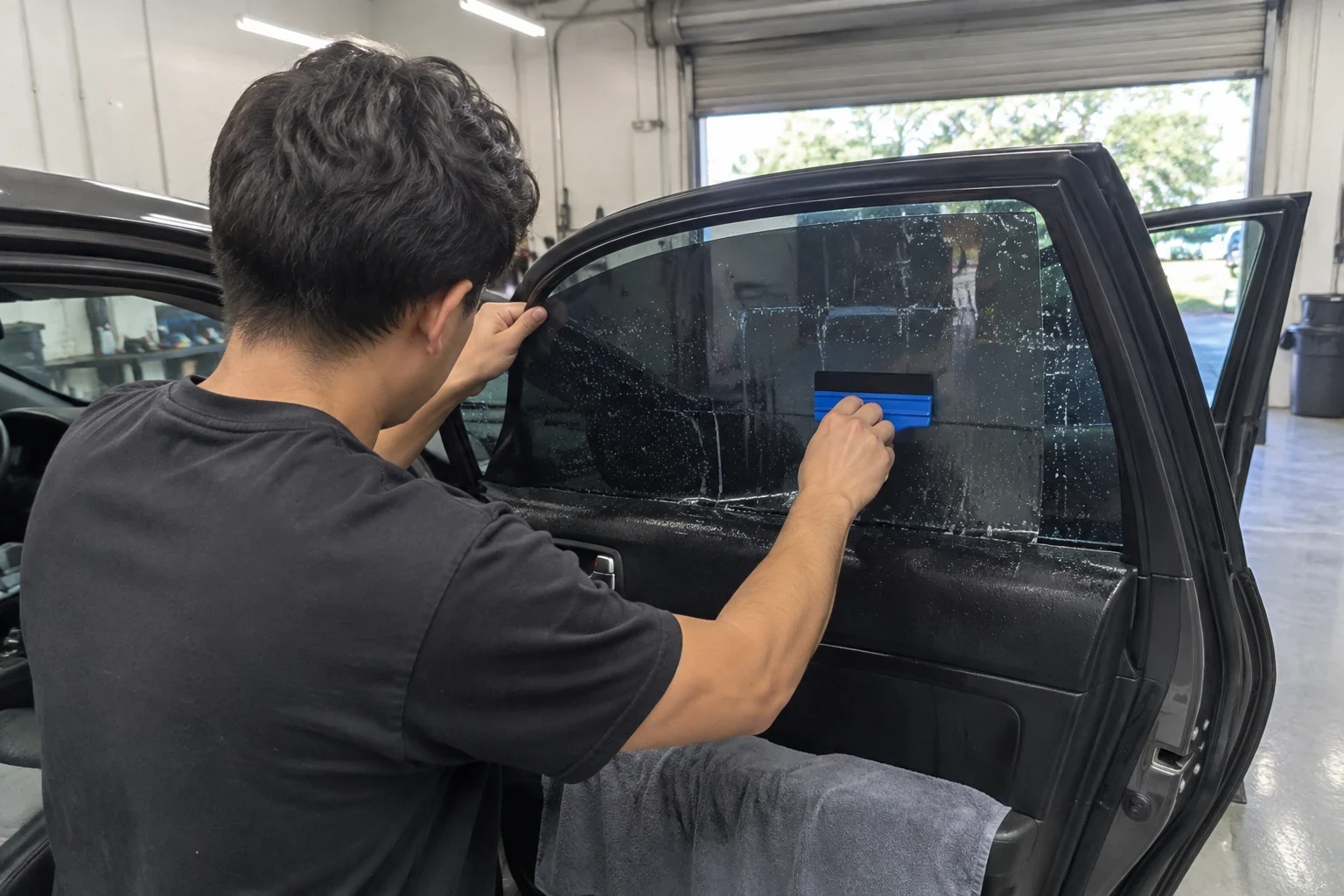
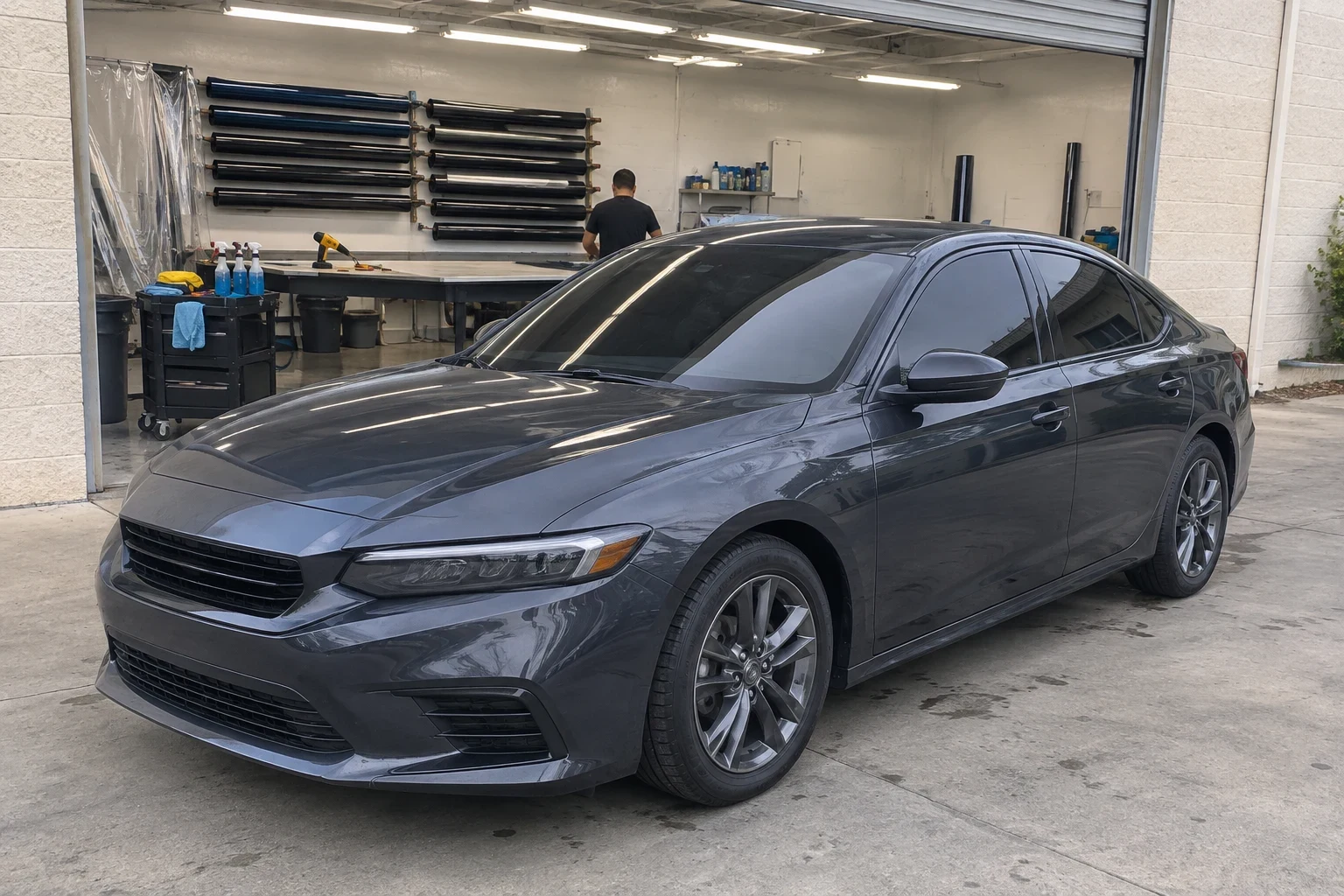
We install carbon and ceramic window tint for cars, trucks and SUVs. The film knocks down cabin heat, stops most UV before it reaches your seats and dash, and cuts glare. One small crew handles your car start to finish: the person who helps pick the shade also cleans the glass and lays the film.
What window tint does for your car
Good film does more than darken glass. A quality ceramic tint rejects a big share of the infrared heat that bakes a parked car, and nearly all of the UV that cracks dashboards and fades seats. On a July afternoon in the valley, that is the difference between a steering wheel you can hold and one you can't.
We are a small shop on purpose. One crew handles your car from the first conversation to the final check, so nothing gets lost between a front-desk promise and the install bay. You talk to the person doing the work, and they remember what you asked for.
We carry certifications from multiple PPF, ceramic coating and tint brands, and we stick to films we have installed many times and know how they age.
What's included in a tint install
- Film choice that fits how you drive
- We go over carbon and ceramic options and hold real samples up to the glass. Ceramic film has no metal in it, so your phone, GPS and keyless entry work like normal.
- Shade picked to California rules
- Front side windows in California must pass at least 70 percent of light, and factory glass already uses up part of that. The rear side windows and back glass can be darker. You'll know what is legal before we cut any film.
- Computer-cut or hand-trimmed patterns
- Every piece is cut to fit your car's glass. We file the edges so the film sits snug at the top of a roll-down window.
- Old film removal
- Faded, peeling or bubbled tint comes off with steam and slow scraping. On the back glass we work gently over the defroster grid so it still heats when we're done.
- Top-of-windshield strip
- A band of film along the top edge of the windshield takes the bite out of low sun at sunrise and sunset. We keep it above the legal cutoff line.
- Final inspection with you
- Before you drive off, we check every window together and go over cure time.
Signs it's time for new tint
Your old tint turned purple
Cheap dyed film breaks down in the sun and changes color. By that point it lets most of the heat right through.
Blisters or lifting corners
That means the glue is giving out. It keeps getting worse, and it makes the glass hard to see through at night.
The cabin is an oven after parking
If the AC runs for ten minutes before the car feels normal, the glass is letting in too much infrared heat.
Dash and seats are fading
UV does that damage slowly. Film stops most of it before the leather cracks or the dash starts to warp.
You got a fix-it ticket
Front windows that are too dark can get you cited. We remove the illegal film and install a shade that passes.
How your tint appointment goes
- 1
Talk it through by phone
Tell us the year, make and model, and what bothers you most: heat, glare, privacy or looks. You'll hear the price on that call, and we'll pick a day that works for you to drop the car off at our shop.
- 2
Prep the glass
We clean every window inside and out, clear the gasket edges and cover your door panels and electronics so water stays off them.
- 3
Cut, shrink and install
Film is cut to your glass, heat-shrunk to fit curved rear windows, then squeegeed down so no water or dust is trapped. Most cars take a few hours.
- 4
Walk-around and cure time
We go over each window with you. Leave the windows up for several days so the adhesive can set. Some light cloudiness or tiny water spots under the film are expected, and they dry out by themselves, quicker when it's warm.
What moves the price of window tint
Tint pricing comes down to how much glass there is, which film you pick and what has to happen before the new film goes on. We give you the number by phone before you book, and it covers the full job we talked about.
- Film type
- Carbon film costs less and handles glare and privacy well. Ceramic costs more and rejects far more heat.
- Number and shape of windows
- A two-door coupe is quicker than a full-size SUV with quarter glass. Steeply curved back windows take more time to shrink and fit.
- Removing old tint
- Stripping failed film and old glue adds time, especially on a back window with defroster lines.
- Extra pieces
- A windshield sun strip or a sunroof adds to the total. If you want the windshield fully covered, ask about our windshield protection film as well.
Window tint questions we hear
Something not covered here? (916) 751-1838
How dark can I go and stay legal in California?
The law says your front side windows have to pass at least 70 percent of visible light. That rules out dark film up front, so we use a clear or close-to-clear ceramic there that still knocks down heat. With both side mirrors in place, the rear side windows and back glass can go as dark as you want. We hold samples up so you can compare before deciding.
Is ceramic tint really worth the extra money?
If heat is what bothers you, it usually is. At the same shade, ceramic stops a lot more infrared heat than carbon, and that counts most on the front windows where dark film isn't an option. If privacy and looks are the goal, carbon is a solid choice.
How long will my car be at the shop?
A full install usually runs a few hours. Stripping old tint first makes it longer. We'll give you a time estimate on the phone.
When can I roll my windows down?
Give it three to five days. If you lower a window too soon, the glass can catch the film edge and peel it up. Hot weather shortens the wait.
Will tint affect my rear defroster or radio?
No. The carbon and ceramic films we use contain no metal, so radio, phone and GPS signals pass right through. The film sits on the inside of the glass and doesn't hurt defroster lines. The real risk is during removal of old tint, where stuck glue can pull at the lines, so that is where we go slowest.
Do you do other work while the car is in?
Yes. Plenty of people add paint protection film or ceramic coating so they only drop the car off once. Mention it when you call and we'll plan both jobs together.
Ready for a cooler car?
Tell us what you drive and what bugs you most about the glass right now. We'll go over films and shades with you and give you a quote. Drivers come to our shop from Folsom, Citrus Heights, Fair Oaks and all around Orangevale.